Sharp reads on model releases, agent workflows, product shifts, and developer tooling moves that actually change how teams ship.
Release Radar
What launched, what changed, and why it matters beyond the headline.
Market Signals
Short analysis focused on product leverage, workflow risk, and where the category is moving.
Operator Briefs
Concrete next steps for founders, product leads, and AI-native engineering teams.
The latest Cursor update enhances AI tool integration, streamlining developer workflows and increasing productivity.
Unlock new productivity with the latest Cursor update, featuring enhanced AI tools for developers.
Unlock the potential of multi-agent kernels to streamline AI workflows and enhance collaborative automation.
Page 112 of 119 • 12 posts per page, excluding featured stories

Bubble's new in-app purchase subscription feature (beta) lets no-code developers implement recurring revenue directly in iOS and Android apps. Step-by-step guides now available for immediate setup.

Dify's new plugin system lets you extend AI apps without forking code. Here's what it means for your architecture decisions.

Prisma v7.4 adds partial indexes and resolves BigInt precision bugs—practical improvements that address real scaling challenges builders face in production databases.
Google's first multimodal embedding model expands beyond text. What builders need to know about implementation, limitations, and competitive positioning.

Global draft versions, multimodal AI, and role-based deployments ship in Directus v11.16. What builders need to know about workflow automation and content governance.
Temporal's new Task Queue Priority & Fairness feature lets you customize task execution ordering. Here's what builders need to know about implementation and when it matters.
Worker Versioning is now in public preview, letting you deploy workflow changes safely without breaking running instances. This solves a critical operational friction point.
OpenAI's GPT-5.3 Instant prioritizes speed and search accuracy. For builders, this means lower latency for web-dependent applications and more reliable real-time information retrieval.

Claude Code's expansion to Team and Enterprise tiers unlocks terminal-based development workflows for group use. Here's how it changes your build strategy.

Zed's latest stable release adds parallel subagent execution and Vercel AI Gateway support, signaling a shift toward modular AI architectures and provider-agnostic tooling.
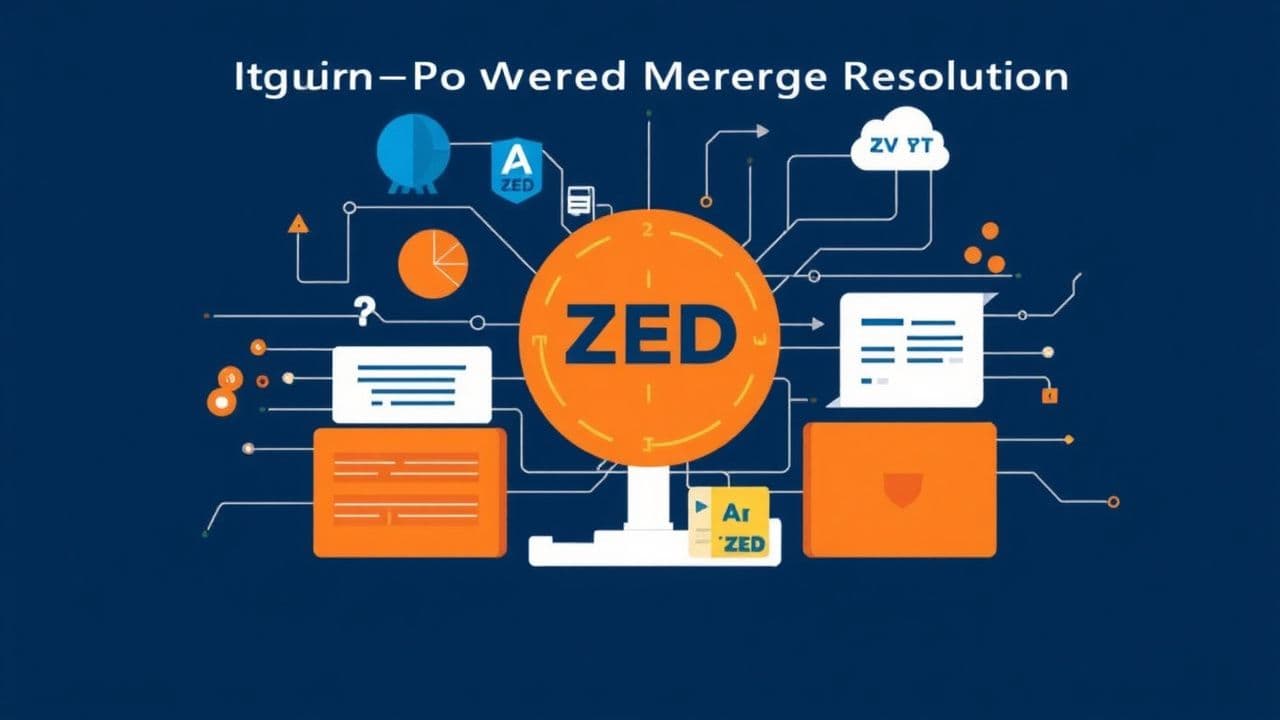
Zed adds AI-driven merge conflict resolution and branch diff mentions. This shifts conflict handling from manual to automated—test it now to evaluate impact on your workflow.
Differential upload support cuts redundant data transfers for GPU tasks on Render. Builders should assess whether this improves their compute job efficiency and cost structure.
One concise email with the releases, workflow changes, and AI dev moves worth paying attention to.
