Blizzard's latest patch introduces procedural disruption systems and group-scaling mechanics. Builders should study how Void Assaults handle player engagement without forcing participation.
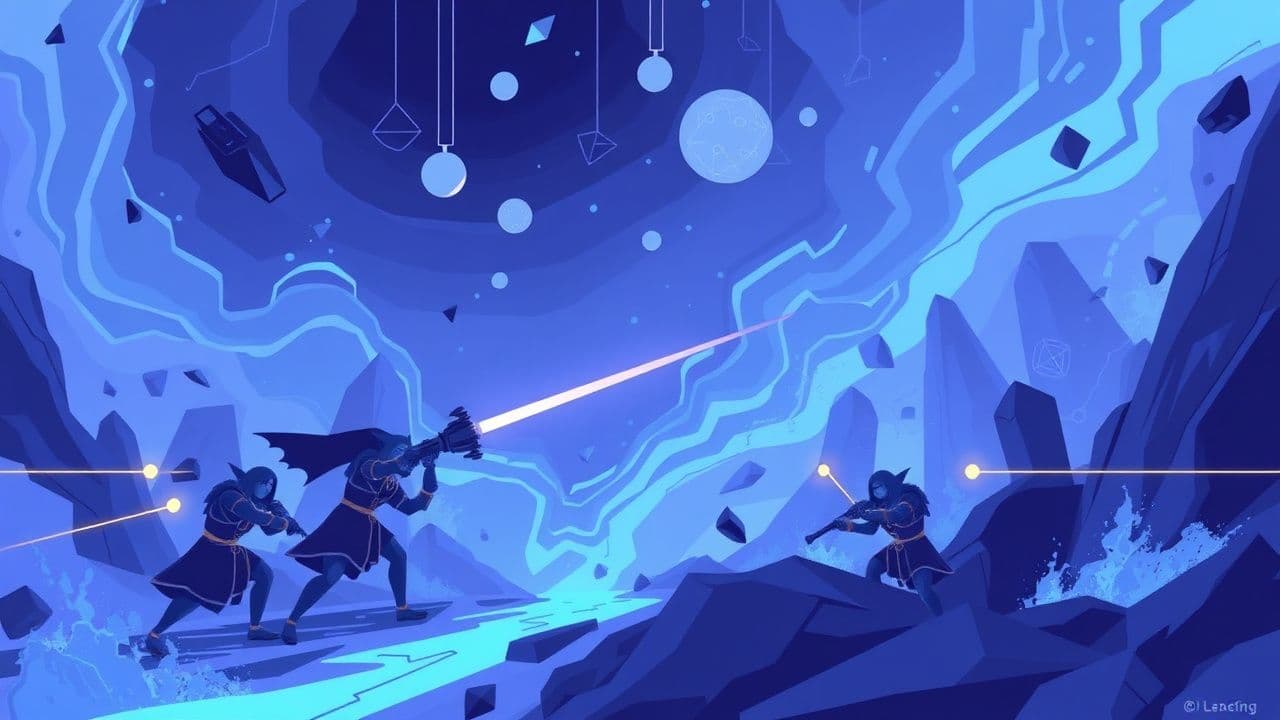
Builders can reduce engagement friction and improve retention by combining procedural world events, transparent soft-currency progression, and voluntary social mechanics—exactly what WoW 12.0.5 demonstrates.
Signal analysis
Void Assaults function as a randomized, location-based event system that generates recurring engagement without predetermined timing. Unlike traditional raid lockouts or dungeon queues, Assaults create friction points—Ritual Sites—that players must actively disrupt. This is a scheduling abstraction: instead of asking players to commit to fixed windows, the system makes content appear in their existing gameplay loop.
The architectural significance: Blizzard decoupled progression from participation mandates. Players choose to engage with Ritual Sites, but the system ensures something is always 'under threat.' This creates persistent world state without requiring server-wide synchronization for every player interaction.
For builders, the lesson is clear: procedural systems reduce content fatigue by creating the illusion of scarcity and urgency while maintaining player agency. The Assaults don't *force* you to care—they reward you for noticing disruptions that occur naturally in zones you're already traversing.
Voidforge appears to be a collectible progression system tied to Void Assault completion—essentially a soft-currency gate that requires sustained engagement rather than raw power. This is a familiar pattern (reputation bars, soul-gating systems) but the implementation matters: Blizzard is separating the *loot unlock* from the *power acquisition*, allowing casual players to see progress without requiring optimized farming routes.
The design trades time for convenience. Players can target-farm Ritual Sites or wait for natural Assaults. Both paths lead to Voidforge progress, but with different DPS—exactly how soft-currency systems should function. Builders should note that this avoids the trap of creating 'correct' play patterns while still maintaining a clear path for power-seeking players.
The signal here is about retention mechanics: Voidforge creates a reason to log in weekly without creating FOMO. It's predictable progression, which is antithetical to hype-based engagement but superior for long-term retention math.
Decor Duels represent an interesting solve for the group-content scaling problem. Rather than creating raid encounters that require guild coordination or dungeon queues that bottleneck players, Blizzard implemented a competitive social framework that works with ad-hoc grouping. The label 'Decor Duels' suggests cosmetic or non-power-determining competition—players engage for achievement, transmog, or bragging rights rather than gear progression.
This segregation of reward types is critical. By making group content non-mandatory for power progression, Blizzard maintains the voluntary social layer while preventing it from becoming a gate. Players who prefer solo gameplay aren't locked out of mythic+ or raid equivalents; they pursue different reward tracks.
For builders: This is how you prevent social content from becoming coercive. Decor Duels likely leverage existing dungeon or zone infrastructure but reframe the reward structure around prestige and cosmetics—exactly where competitive tension should live.
WoW 12.0.5 demonstrates three operational principles worth isolating: (1) Procedural systems reduce content fatigue by distributing engagement across time without hard scheduling, (2) Soft-currency gates create progression visibility while maintaining time-to-power differentiation, (3) Voluntary social mechanics prevent mandatory group content from gatekeeping solo players.
The patch succeeds because it doesn't try to solve every retention problem with a single mechanic. Void Assaults handle world engagement. Voidforge handles progression pacing. Decor Duels handle social engagement. Each system has a specific job, uses existing infrastructure, and creates optional engagement rather than mandatory checklists.
The operational takeaway: complexity emerges from combining simple, focused systems rather than creating one elaborate system that tries to do everything. Void Assaults are simple (disrupt sites, earn progress). Voidforge is simple (collect currency). Decor Duels are simple (compete in groups). The emergent experience is rich because the systems interact naturally, not because each individual system is feature-complete.
Best use cases
Open the scenarios below to see where this shift creates the clearest practical advantage.
One concise email with the releases, workflow changes, and AI dev moves worth paying attention to.
More updates in the same lane.
The latest Cursor update enhances AI tool integration, streamlining developer workflows and increasing productivity.
Unlock new productivity with the latest Cursor update, featuring enhanced AI tools for developers.
OpenAI's recent update introduces enhanced features that streamline developer workflows and boost automation capabilities.
