Unstructured's data processing engine is now embedded directly in Teradata's enterprise vector store, eliminating a critical pipeline gap for production AI systems handling multi-modal data at scale.
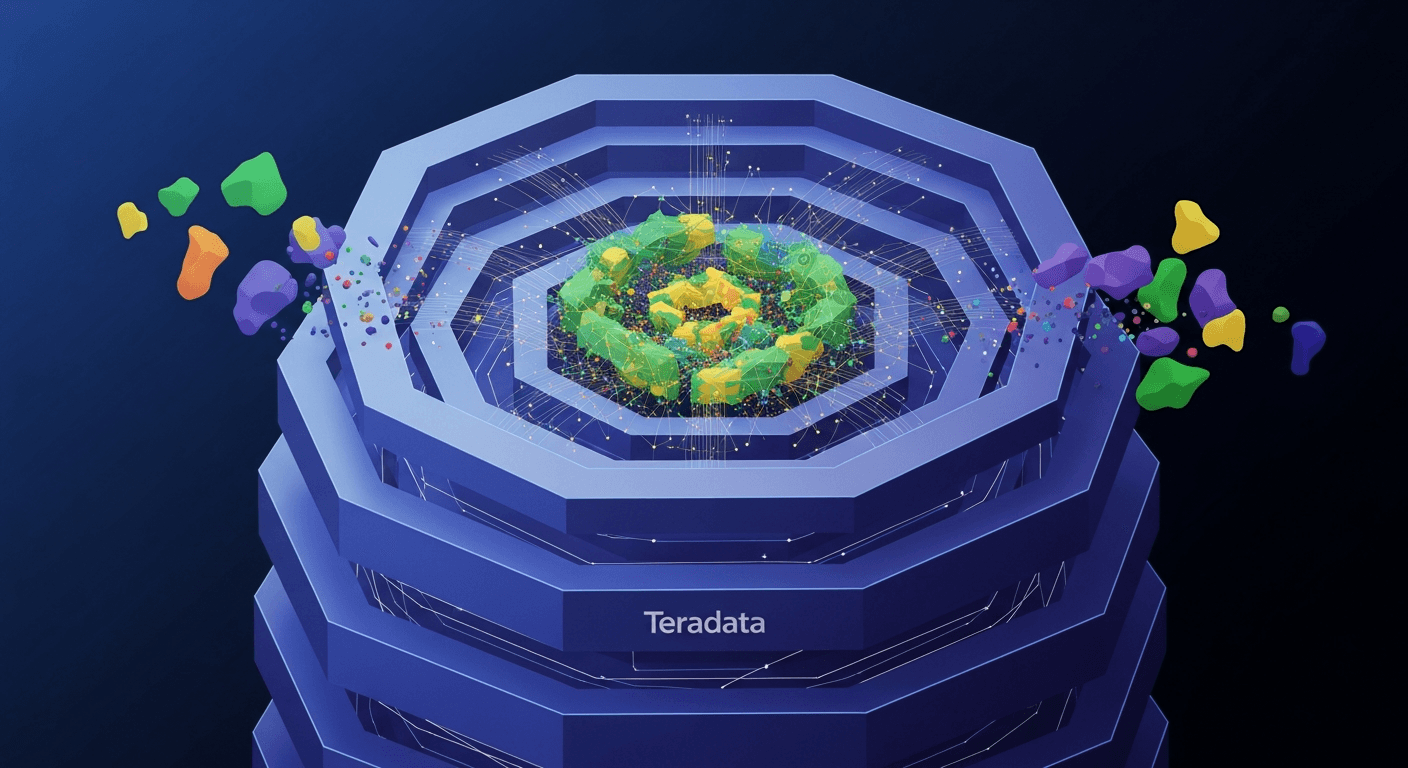
Eliminate external document processing pipelines for Teradata users; reduce ingestion-to-embedding latency and operational overhead in enterprise RAG systems.
Signal analysis
Previously, enterprises building RAG systems faced a familiar friction point: Unstructured's document processing lived outside their vector database. You'd parse PDFs, images, and tables in one system, then move the embeddings elsewhere—adding latency, complexity, and operational overhead.
This partnership embeds Unstructured's parsing directly into Teradata Enterprise Vector Store. That means multi-modal ingestion (PDFs, images, tables, scanned documents) happens inside the database layer itself. No intermediate pipelines. No data movement between systems.
The practical impact: reduced infrastructure complexity, lower operational burden, and faster time-to-embedding for document-heavy workloads. For builders managing complex data estates, this is infrastructure debt elimination.
The real value here is scope reduction. Teradata users no longer need to maintain separate Unstructured deployments, coordinate API calls, or manage intermediate storage. For enterprises with thousands of documents flowing through daily, that's meaningful engineering lift removed.
The limiting factor remains data scale and latency expectations. Embedding documents inside the database can be slower than processing them in dedicated compute environments. Builders with ultra-high-throughput ingestion requirements (millions of documents daily) may still want parallel external processing pipelines.
This integration works best for steady-state enterprise use cases: quarterly document reviews, regulatory data ingestion, knowledge base updates. It's less optimized for real-time streaming document processing or extreme-scale batch operations.
This partnership reflects a maturing enterprise AI stack. in 2026, builders were stitching together Unstructured + Pinecone/Weaviate + LLM APIs as DIY solutions. Now, database vendors are bundling parsing and vectorization into integrated products.
Teradata's move signals that vector storage is table stakes for enterprise databases. It's no longer a standalone concern—it's infrastructure. Expect Postgres (with pgvector), MongoDB, and others to follow with similar parsing integrations.
For builders: this consolidation is both opportunity and warning. It means fewer components to operate, but also fewer reasons to stay vendor-agnostic. Lock-in risk increases when parsing, vectorization, and storage live in one product.
If you're a Teradata customer already: evaluate this integration immediately. Map your current document ingestion workflow. If you're using Unstructured separately, consolidating into Teradata's native capability removes infrastructure debt and operational toil.
If you're standardizing on vector databases: don't let this partnership drive lock-in decisions. Unstructured remains available as a standalone service. Weigh integration convenience against portability. For teams without strong Teradata commitment, external processing + multi-vector-store architecture remains more flexible.
If you're building RAG systems from scratch: use this as a signal that the enterprise stack is crystallizing. Pick your primary database (Teradata, Postgres + pgvector, MongoDB) first, then evaluate integrated parsing capabilities. Starting with unbundled components and consolidating later costs less than rearchitecting after lock-in.
Best use cases
Open the scenarios below to see where this shift creates the clearest practical advantage.
One concise email with the releases, workflow changes, and AI dev moves worth paying attention to.
More updates in the same lane.
The latest Cursor update enhances AI tool integration, streamlining developer workflows and increasing productivity.
Unlock new productivity with the latest Cursor update, featuring enhanced AI tools for developers.
OpenAI's recent update introduces enhanced features that streamline developer workflows and boost automation capabilities.
