Explore the latest ChatGPT app integrations with popular services like DoorDash, Spotify, and Uber, transforming how developers and users interact with AI.
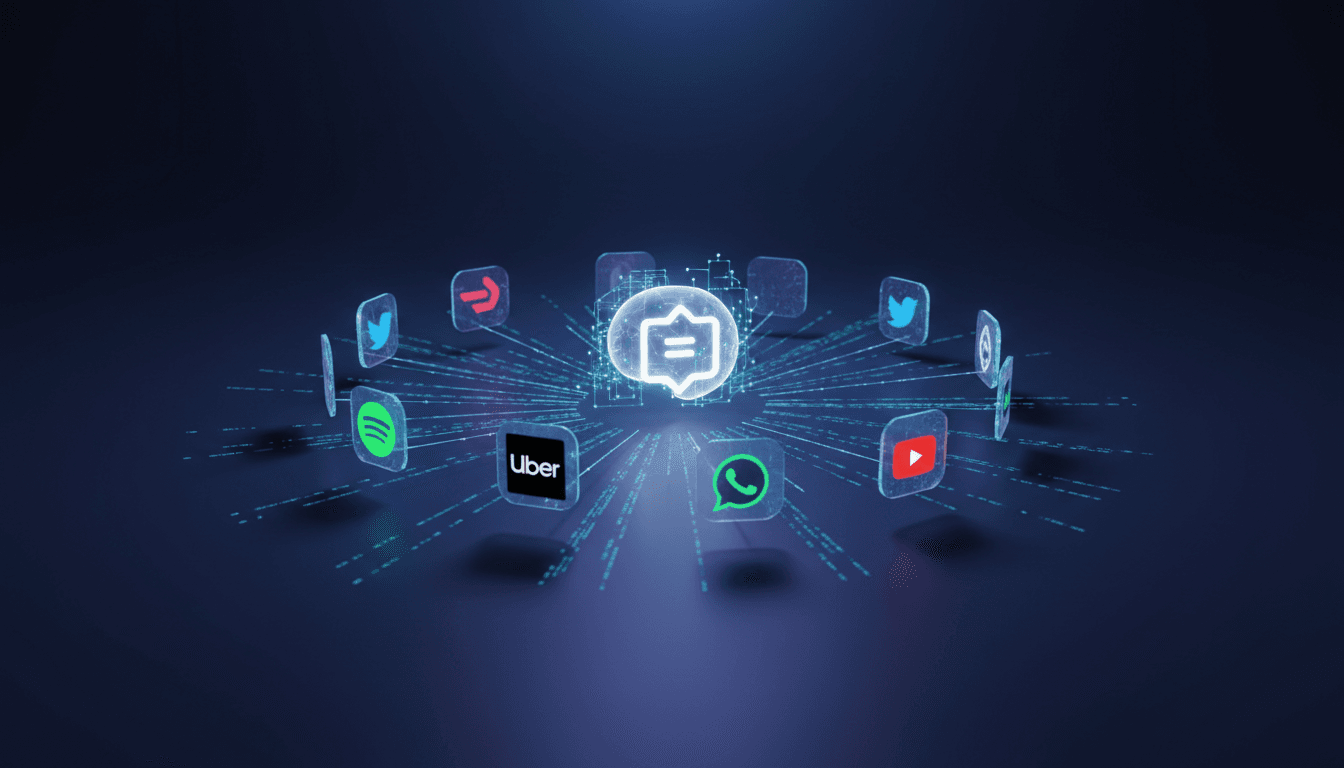
Expanded ChatGPT app integrations enable bidirectional context and action flows, transforming applications from standalone products into ChatGPT-orchestrated components with strategic tradeoffs around user attention and platform dependency.
Signal analysis
OpenAI has expanded ChatGPT's app integration capabilities, enabling deeper connections between ChatGPT and third-party applications. The updated platform allows apps to push context to ChatGPT and receive action requests, creating bidirectional workflows rather than one-way queries.
New integration patterns include persistent context sharing, action webhooks, and state synchronization. Apps can now maintain ongoing context in ChatGPT—a CRM can keep current customer information accessible across multiple ChatGPT conversations without repeated queries.
The integration SDK provides standardized patterns for common use cases. Authentication follows OAuth flows familiar to developers. Context updates use simple REST APIs. Action handling follows webhook patterns. The SDK reduces integration time from weeks to days for typical applications.
Deep ChatGPT integration changes how users interact with applications. Rather than switching between ChatGPT and your app, users stay in ChatGPT while your app provides context and executes actions. This shifts interface ownership from your app to ChatGPT.
For application developers, this creates strategic tension. Integration unlocks powerful workflows but cedes user attention to ChatGPT. Users who previously visited your app may instead interact through ChatGPT. You maintain functionality but lose direct engagement.
The integration quality becomes competitive differentiator. Users will prefer apps with seamless ChatGPT integration over alternatives requiring manual context switching. This creates pressure to integrate while amplifying the interface ownership concern.
Start with context relevance. What information from your app would improve ChatGPT's responses to your users? Customer context for CRMs. Document context for knowledge bases. Project context for PM tools. Define the context that makes ChatGPT more useful in your domain.
Design action patterns carefully. What actions should users be able to request through ChatGPT? Keep initial actions simple and well-defined. Complex multi-step actions are harder to get right and more likely to frustrate users with incorrect interpretations.
Handle state consistency. When ChatGPT executes actions in your app, your app's state changes. Users returning to your direct interface should see these changes reflected. State synchronization between ChatGPT-initiated actions and your app requires explicit design.
Read-only integrations carry lower risk. Providing context to ChatGPT doesn't change your app's state. Users get improved ChatGPT responses; you learn nothing about their queries. This is the safest starting point for integration exploration.
Action integrations require more careful design. Users can modify your app's state through ChatGPT. Incorrect interpretations can cause real problems. Implement confirmation steps for consequential actions. Build robust error handling for action failures.
The data flow implications deserve consideration. Context shared with ChatGPT enters OpenAI's systems. Depending on your data sensitivity, this may require user consent flows or may be inappropriate entirely. Understand data handling before enabling context sharing.
ChatGPT integration becomes expected competitive capability. As more apps integrate, users develop expectations for ChatGPT accessibility. Apps without integration feel disconnected. The absence becomes noticeable rather than normal.
The platform power dynamic favors OpenAI. As applications integrate, they become dependent on ChatGPT's distribution. OpenAI could change terms, pricing, or capabilities in ways that affect integrated applications. This dependency risk deserves explicit consideration.
Successful integrations create new interaction paradigms. Users who experience well-designed ChatGPT integration will expect similar capabilities from other apps. Early integrators shape user expectations that followers must meet.
Best use cases
Open the scenarios below to see where this shift creates the clearest practical advantage.
One concise email with the releases, workflow changes, and AI dev moves worth paying attention to.
More updates in the same lane.
The latest Cursor update enhances AI tool integration, streamlining developer workflows and increasing productivity.
Unlock new productivity with the latest Cursor update, featuring enhanced AI tools for developers.
OpenAI's recent update introduces enhanced features that streamline developer workflows and boost automation capabilities.
