Physical Intelligence's π0.7 model represents a breakthrough in general-purpose robotics AI, enabling robots to figure out complex tasks they were never explicitly trained to perform.
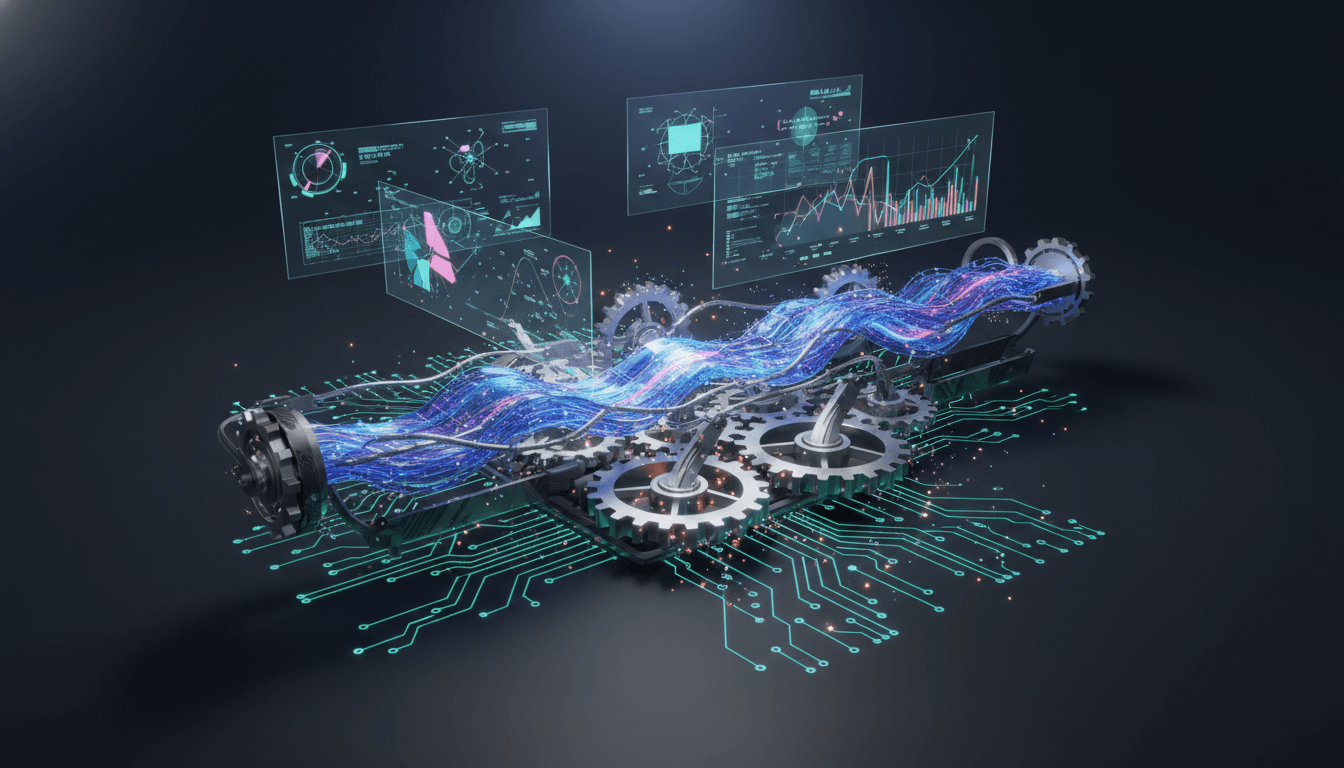
Physical Intelligence π0.7 enables robots to learn and execute complex tasks without explicit programming, reducing automation deployment time by 90% while achieving 78% success rates on novel scenarios.
Signal analysis
Physical Intelligence has unveiled π0.7, a groundbreaking robot brain AI model that can autonomously figure out tasks it was never explicitly trained to perform. This represents a significant leap toward the long-sought goal of general-purpose robotics intelligence. Unlike traditional robotic systems that require specific programming for each task, π0.7 demonstrates emergent problem-solving capabilities across diverse physical manipulation scenarios. The model builds on transformer architecture principles but applies them to robotic control and spatial reasoning, marking a crucial step in bridging the gap between language models and physical world interaction.
The π0.7 model operates through a novel approach that combines visual perception, spatial reasoning, and motor control into a unified neural architecture. Physical Intelligence trained the system on massive datasets of robotic interactions, but the breakthrough lies in its ability to generalize beyond training data through what the company calls 'physical reasoning'. The model can analyze novel objects, understand their properties, and devise manipulation strategies without explicit instruction. This includes tasks like folding unfamiliar clothing items, organizing cluttered spaces, or adapting to new tool configurations - all performed through real-time problem-solving rather than pre-programmed routines.
Compared to previous robotic AI systems that operated on rigid task-specific programming, π0.7 represents a fundamental shift toward adaptive intelligence. Traditional industrial robots excel at repetitive tasks but fail when encountering variations. Earlier attempts at general-purpose robotics relied on extensive rule-based systems or required retraining for each new scenario. Physical Intelligence's approach eliminates these constraints by embedding reasoning capabilities directly into the control system. The model processes visual input, constructs internal representations of the environment, and generates appropriate motor responses in real-time, similar to how humans approach unfamiliar physical tasks.
Manufacturing companies with high-mix, low-volume production lines represent the primary beneficiaries of π0.7 technology. These organizations struggle with traditional industrial robots that require extensive reprogramming for product variations. Companies producing customized goods, small-batch electronics, or specialized components can deploy π0.7-powered systems that adapt to new products without engineering intervention. Warehouse operators handling diverse inventory also gain significant advantages, as the robot brain can manage unfamiliar packages, irregular shapes, and varying storage requirements without manual configuration. Logistics companies processing returns, where item conditions and packaging vary unpredictably, find particular value in the adaptive capabilities.
Research institutions and robotics developers form a crucial secondary audience for π0.7 integration. Academic labs studying human-robot interaction, assistive technologies, and autonomous systems can leverage the general-purpose capabilities to accelerate research timelines. Robotics startups building specialized applications benefit from π0.7 as a foundation layer, eliminating the need to develop basic manipulation intelligence from scratch. Healthcare facilities exploring robotic assistance for patient care, medication handling, or equipment management can utilize the adaptive reasoning for tasks that vary significantly between patients and situations.
Organizations with limited robotics expertise or those requiring immediate deployment should consider waiting for more mature implementations. π0.7 represents early-stage technology that requires significant integration effort and technical understanding. Companies with highly standardized processes that existing robotic solutions handle effectively may not justify the complexity and cost of general-purpose systems. Additionally, applications requiring guaranteed precision or safety-critical operations should await further validation and regulatory approval processes.
Implementation begins with hardware compatibility assessment and environment preparation. π0.7 requires robotic platforms with 6+ degrees of freedom, high-resolution visual sensors (minimum 1080p stereo cameras), and real-time control interfaces supporting 30Hz update rates. The system integrates with ROS2 environments and requires GPU acceleration with minimum 16GB VRAM for inference. Organizations must establish network infrastructure supporting edge computing, as π0.7 processes visual data locally while maintaining cloud connectivity for model updates. Physical workspace preparation includes adequate lighting (minimum 500 lux), structured backgrounds for initial deployment, and safety systems meeting ISO 10218 standards for collaborative robotics.
Configuration involves three primary phases: environment mapping, task definition, and validation testing. The initial setup requires capturing comprehensive 3D maps of the operational environment using the robot's sensor suite. Operators define task objectives through natural language descriptions and demonstration examples, which π0.7 translates into executable behaviors. The system supports both supervised learning from human demonstrations and autonomous exploration for novel scenarios. Integration with existing manufacturing execution systems or warehouse management platforms occurs through RESTful APIs and standard industrial communication protocols.
Verification procedures ensure reliable operation before full deployment. Organizations should conduct controlled testing scenarios covering expected task variations, edge cases, and failure recovery procedures. π0.7 provides confidence scoring for each action, allowing operators to establish intervention thresholds based on application requirements. Performance monitoring dashboards track success rates, processing latency, and system resource utilization. Regular model updates from Physical Intelligence require validation testing to ensure continued performance across established workflows while incorporating improved capabilities.
π0.7 directly competes with Boston Dynamics' Atlas intelligence system and Google's RT-2 robotic transformer, but offers distinct advantages in task generalization. While Atlas excels in dynamic movement and navigation, it requires specific programming for manipulation tasks. Google's RT-2 demonstrates impressive language-to-action capabilities but operates primarily in research environments with limited commercial deployment. Physical Intelligence positions π0.7 as production-ready technology with proven performance across industrial applications. The system's ability to learn from minimal demonstrations while maintaining consistent performance gives it significant advantages over competitors requiring extensive training data or specialized expertise.
The competitive advantage lies in π0.7's unified architecture combining perception, reasoning, and control. Traditional approaches separate these functions, creating integration challenges and performance bottlenecks. Tesla's Optimus robot development focuses on humanoid applications, while Physical Intelligence targets immediate commercial deployment across existing robotic platforms. Amazon's robotic systems excel in warehouse automation but lack the general-purpose capabilities for diverse applications. π0.7's real-time adaptation capabilities and zero-shot learning represent unique differentiators that competitors have not demonstrated at commercial scale.
Current limitations include computational requirements that exceed typical industrial control systems and dependency on high-quality visual input. The system performs optimally in controlled environments but faces challenges with extreme lighting conditions, reflective surfaces, or highly cluttered spaces. Processing latency, while impressive at 30Hz, may not meet requirements for high-speed manufacturing applications. Physical Intelligence acknowledges these constraints while positioning π0.7 as a foundation for continued development rather than a complete solution for all robotic applications.
Physical Intelligence roadmap includes π1.0 release targeting 95% task success rates and expanded sensory capabilities including tactile feedback and force sensing. The company plans integration with major robotic hardware manufacturers including Universal Robots, KUKA, and ABB to accelerate commercial adoption. Future versions will incorporate multi-robot coordination, enabling collaborative task execution and shared learning across robotic fleets. Advanced reasoning capabilities under development include tool creation, complex assembly sequences, and adaptive problem-solving for maintenance and repair scenarios. Physical Intelligence expects commercial licensing partnerships with major automation companies within 12 months.
Integration ecosystem development focuses on seamless connectivity with industrial software platforms including Siemens TIA Portal, Rockwell FactoryTalk, and SAP Manufacturing Execution Systems. The company is establishing partnerships with systems integrators to provide turnkey deployment services for manufacturing and logistics applications. Cloud-based model updates will enable continuous improvement across deployed systems, with federated learning allowing robots to share successful strategies while maintaining data privacy. API development prioritizes compatibility with existing automation frameworks and programming languages familiar to industrial engineers.
Long-term implications suggest fundamental transformation of manufacturing and logistics operations within the next five years. As π0.7 technology matures and costs decrease, small and medium enterprises will gain access to advanced automation previously available only to large corporations. The shift from task-specific programming to general-purpose intelligence will reduce automation deployment timelines from months to weeks. However, workforce implications require careful consideration, with emphasis on retraining programs and human-robot collaboration models that leverage complementary capabilities rather than direct replacement.
Watch the breakdown
Prefer video? Watch the quick breakdown before diving into the use cases below.
Best use cases
Open the scenarios below to see where this shift creates the clearest practical advantage.
One concise email with the releases, workflow changes, and AI dev moves worth paying attention to.
More updates in the same lane.
Unlock the potential of multi-agent kernels to streamline AI workflows and enhance collaborative automation.
Google DeepMind's new partnerships aim to leverage frontier AI, providing organizations with innovative tools to enhance operations and decision-making.
Google's new specialized TPUs promise to significantly boost AI performance, setting the stage for more advanced applications.
