Galileo releases an open source Control Plane for AI agents, addressing the enterprise governance gap. Builders can now implement deep observability and control without vendor lock-in.
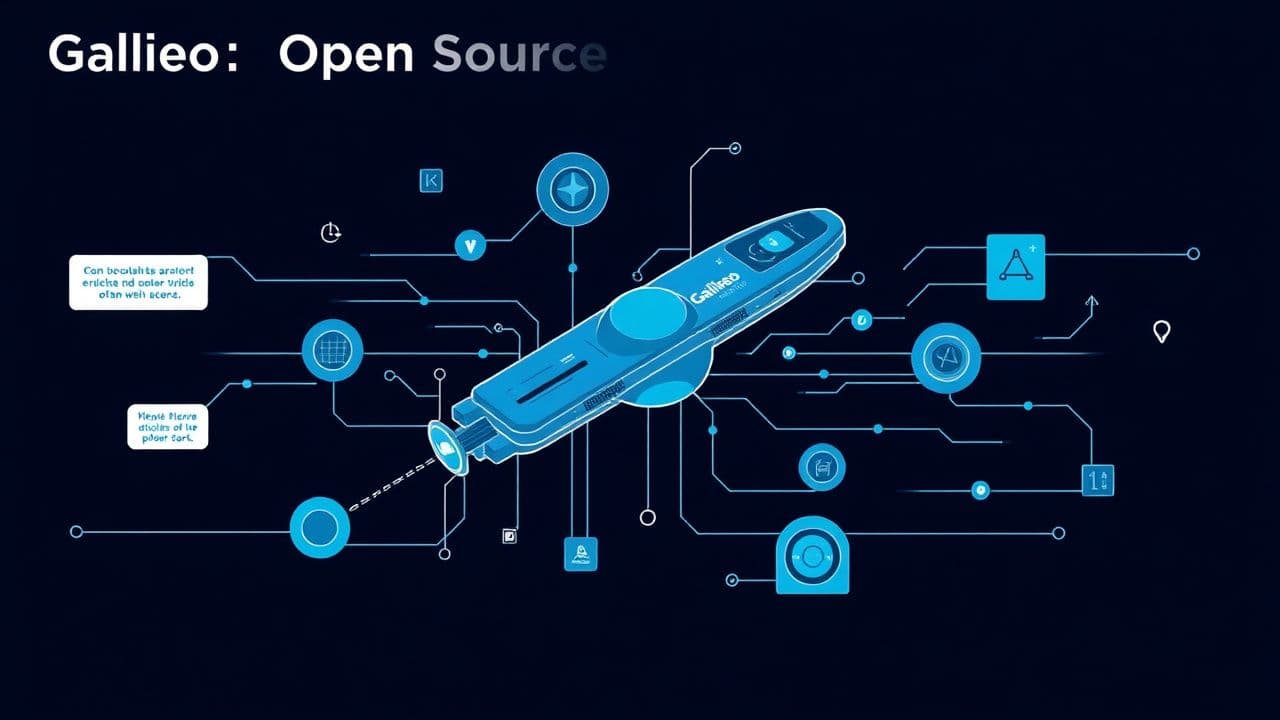
Standardized agent governance infrastructure that builders can deploy on their own infrastructure, reducing risk and operational burden for production agent systems.
Signal analysis
Galileo's open source Control Plane is infrastructure for managing AI agents at enterprise scale. It provides two core capabilities: deep observability into agent behavior and execution, and control mechanisms to enforce policies, limits, and safety guardrails across your agent fleet.
This isn't a new agent framework or model wrapper. It's governance infrastructure designed for teams already building agents but lacking visibility into what those agents are doing in production. The open source release means builders can run it on their own infrastructure, inspect the code, and customize it without Galileo's SaaS dependency.
The GitHub availability is significant. It removes friction for teams evaluating whether they need this layer and lets them integrate it directly into existing deployment pipelines rather than adding another vendor relationship.
Most AI agent frameworks today focus on functionality—how to build agents, define tools, orchestrate workflows. Few address what happens after deployment: How do you know if an agent is behaving correctly? What happens if it misuses a tool or operates outside intended boundaries? How do you audit agent decisions for compliance or debugging?
For enterprises moving from experimentation to production, this gap creates friction. Teams resort to custom logging, manual auditing, or keeping agents artificially constrained to prevent failures. A standardized control plane reduces this operational burden and makes agent deployment less risky.
Galileo's open source move is tactical. It lowers the barrier to adoption—builders can test without SaaS costs—while establishing Galileo as the platform of choice for agent governance. This is how infrastructure tools typically gain adoption in developer communities.
This release reflects a maturing AI agent market. The 2024 wave of agent announcements emphasized capability—what agents can do. The 2025 conversation is shifting to reliability, auditability, and safety. Governance infrastructure becoming open source is a signal that the industry recognizes this as essential, not optional.
Galileo's decision to open source rather than gate behind SaaS also suggests they expect competition. Other observability and agentic orchestration platforms will likely announce similar capabilities. Builders should expect governance tooling to consolidate into agent orchestration platforms within 12-18 months.
The timing matters too. As enterprises begin replacing internal automation and workflows with agents, they need visibility and control at the same level they currently have for traditional software systems. This control plane bridges that expectation gap.
If you're currently building agents or planning agent deployments in the next 6 months, evaluate this control plane before committing to other governance solutions. Open source means low-cost evaluation and the option to build your own governance on top of it.
For teams already in production with agents: audit your current observability and control posture. If you're relying on logging or manual inspection, consider whether standardized infrastructure reduces your operational risk. A control plane won't solve bad agent design, but it makes failures visible faster.
Longer-term: recognize that agent governance is becoming a commodity layer. If your competitive advantage relies on proprietary control mechanisms, you're building on a weakening foundation. Focus on agent design, orchestration, and domain integration instead.
Best use cases
Open the scenarios below to see where this shift creates the clearest practical advantage.
One concise email with the releases, workflow changes, and AI dev moves worth paying attention to.
More updates in the same lane.
The latest Cursor update enhances AI tool integration, streamlining developer workflows and increasing productivity.
Unlock new productivity with the latest Cursor update, featuring enhanced AI tools for developers.
OpenAI's recent update introduces enhanced features that streamline developer workflows and boost automation capabilities.
