Continue's new CLI release enables AI-powered code checks as first-class CI/CD artifacts. Builders can now version, review, and enforce AI validation rules alongside traditional linters.
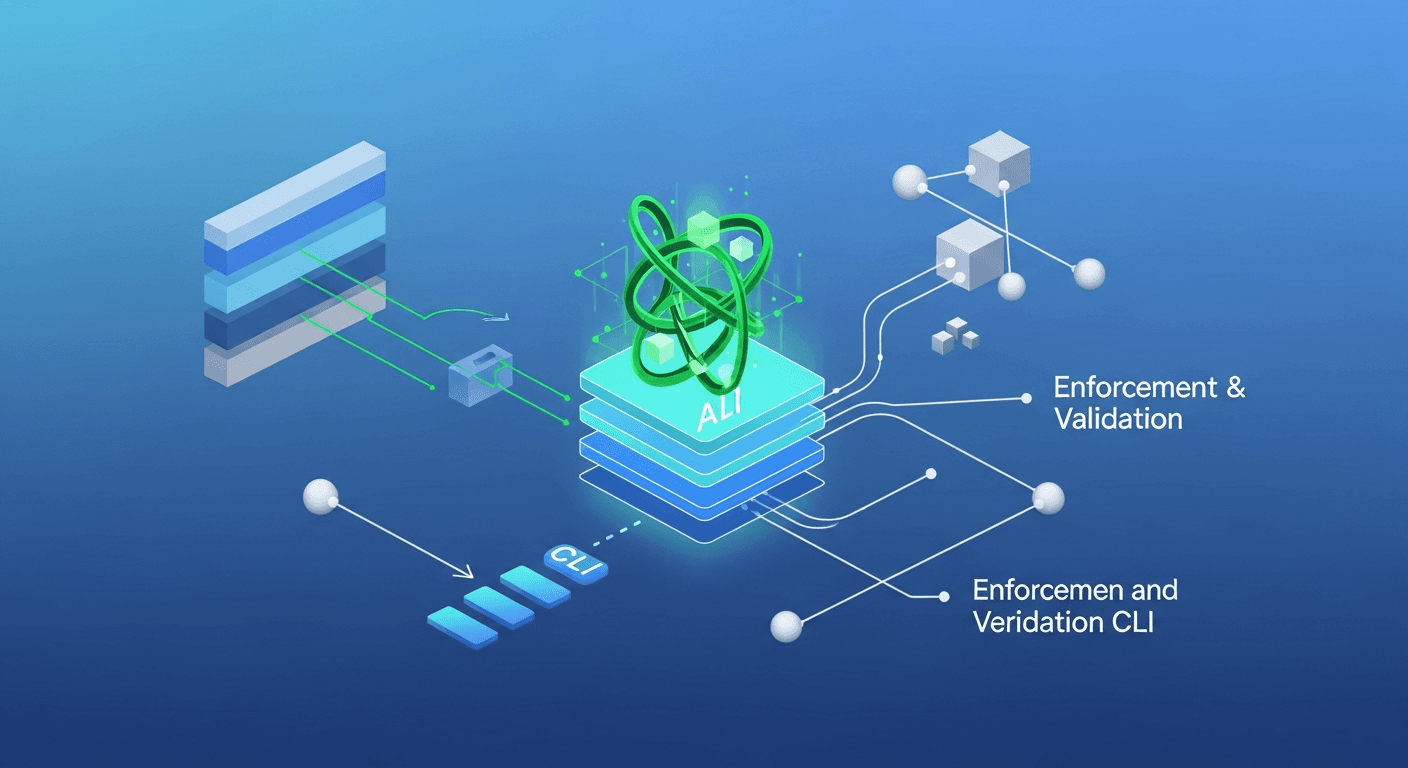
Builders get enforceable, auditable AI validation standards in CI without vendor lock-in—turning AI from solo assistant into team infrastructure.
Signal analysis
Continue's CLI update moves AI-powered code validation from post-hoc review to enforced pipeline gates. Rather than treating AI feedback as advisory, teams can now bake AI checks into CI workflows—the same way they handle linting, testing, and security scanning.
The critical addition: these checks are source-controlled. Your AI validation rules live in version control, can be reviewed in pull requests, and rollback cleanly. This transforms AI from a black-box tool into a managed system component.
This matters because it solves a real operational problem. Teams using AI code review today face reproducibility issues—what triggered a flag yesterday might not trigger it today. Source control fixes that.
For teams using Continue today, this unlocks consistency across developers. Previously, AI assistance was individual—your IDE got suggestions, but your teammate's might differ. Enforced CI checks create a shared standard.
For teams scaling from 5 to 50 engineers, this is a scaling lever. Without enforced checks, code quality degrades as velocity increases. With them, you maintain standards at volume without hiring more code reviewers.
The version-control aspect is underrated. It means your security/code-quality team can propose AI rule changes as PRs. Other teams review them. You approve them. You measure compliance. It's governance-compatible, which matters in regulated environments.
Continue competes in the AI-assisted-development space against GitHub Copilot, JetBrains AI, and internal tooling. This release targets a gap: none of those have strong CI/CD story for enforced, auditable AI checks.
GitHub has Copilot but no native CI enforcement for AI-generated-code validation. JetBrains focuses on IDE experience. Continue is positioning as the 'AI checks for teams' layer—infrastructure for standards, not just assistance.
The open-source nature matters here. Teams can self-host, audit the logic, and avoid vendor lock-in on their AI standards. That's a material differentiator for enterprises and security-conscious builders.
Early adoption will be teams already using Continue + existing CI systems. The on-ramp is: export your current Continue rules, commit them to repo, wire them into your CI config. For most setups, that's 1-2 hours of work.
Medium-term adoption depends on ease of rule definition. If rules require complex YAML or DSL, adoption stalls. If they're simple and visual, adoption accelerates. Watch the official docs for that signal.
Later-stage consideration: integration with observability. Teams will want dashboards showing which rules trigger most, which developers hit them, enforcement rates over time. That's where this becomes a real engineering metrics tool rather than a check box.
Best use cases
Open the scenarios below to see where this shift creates the clearest practical advantage.
One concise email with the releases, workflow changes, and AI dev moves worth paying attention to.
More updates in the same lane.
The latest Cursor update enhances AI tool integration, streamlining developer workflows and increasing productivity.
Unlock new productivity with the latest Cursor update, featuring enhanced AI tools for developers.
OpenAI's recent update introduces enhanced features that streamline developer workflows and boost automation capabilities.
